
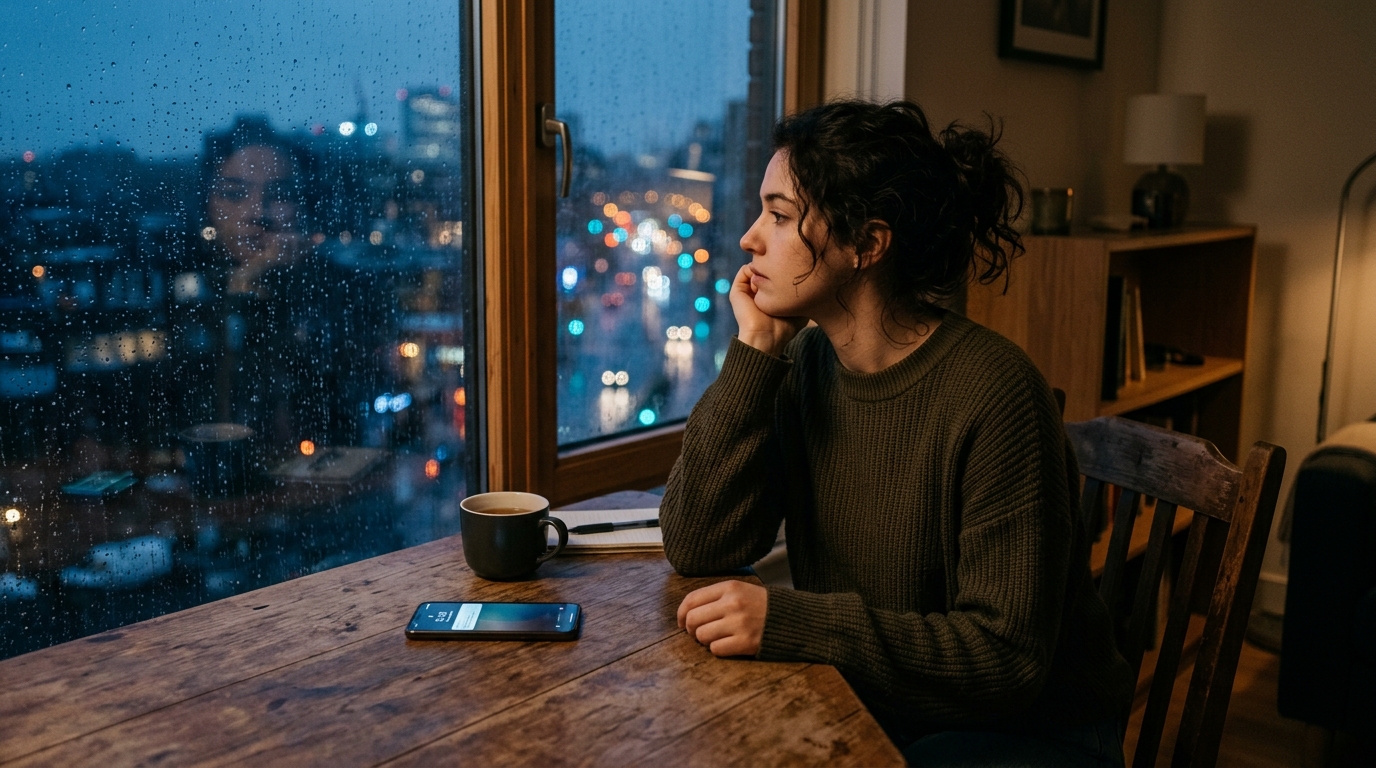
In a world where everyone is just one message away, genuine connection can sometimes feel further away than ever.
We wake up and check our phones before we've even fully opened our eyes. We scroll through photographs of people travelling to beautiful places, celebrate strangers' achievements, reply to messages, and watch short videos until one becomes twenty.
Throughout the day, our screens keep us connected to hundreds of people. We know what our friends ate for lunch, where they went last weekend, what music they're listening to, and sometimes even what they're feeling.
And yet, when the day ends and the room becomes quiet, we may experience a feeling that's difficult to explain.
Despite all the notifications, conversations, and digital interactions, something still feels missing.
It's a strange contradiction of modern life: we have more ways to connect with one another than ever before, yet genuine connection can sometimes feel surprisingly rare.
So, how did we get here? And why can a person surrounded by people, messages, and online interactions still feel lonely?
The illusion of being connected
Think about the last time you had a genuinely meaningful conversation with someone.
Not a conversation interrupted by notifications. Not an exchange of memes or a series of messages ending with "haha." Not a quick discussion about work, money, studies, or everyday responsibilities.
A conversation in which you could speak honestly without worrying about being judged. A moment when you felt that someone was listening, not simply waiting for their turn to talk.
For many of us, those moments are less frequent than we'd like.
Modern communication makes it incredibly easy to reach people, but reaching someone and feeling close to them are two different things.
We can have hundreds of followers without having anyone we feel comfortable calling at two in the morning. We can participate in dozens of group chats and still hesitate when we need to talk about something personal.
We might spend hours interacting with other people online without ever feeling truly understood.
Perhaps the problem isn't that we have stopped communicating. Perhaps we've started confusing communication with connection.
The two can look almost identical from the outside, but they feel very different on the inside.
Social media gives us a window into everyone's life—except our own
Social media has an interesting way of making other people's lives feel closer while making our own lives seem smaller.
Open almost any social platform, and you'll find somebody achieving something.
Someone has secured their dream job. Someone else is travelling abroad. Another person is celebrating a relationship, buying a new home, getting fitter, or building a successful business.
None of these things is inherently wrong. People deserve to celebrate their happiness and achievements.
The difficulty begins when we compare the complete reality of our own lives with carefully selected moments from everyone else's.
We know our own uncertainties, disappointments, financial worries, awkward conversations, and unfinished plans. We experience our lives from the inside, including all the ordinary moments that never make it into a photograph.
But we see other people primarily through what they choose to share.
The comparison is therefore rarely fair.
Someone else's announcement can make us question our progress. A friend's holiday photograph might remind us that we haven't travelled anywhere in years. Seeing people celebrate with large groups can make a quiet weekend feel like evidence that we're missing out.
Sometimes, we start measuring our happiness against other people's highlights without even realising it.
Research suggests that teenagers can experience both connection and pressure on social media. In a 2025 survey by the Pew Research Center, 74% of teens said social media helped them feel more connected to what was happening in their friends' lives. At the same time, 39% said it overwhelmed them with drama, while 27% said it made them feel worse about their own lives.
These findings reveal something important: social media isn't simply good or bad. It can bring people closer while also introducing new pressures and comparisons.
The question is how we use it—and how much power we allow it to have over the way we see ourselves.
Perhaps the next time we find ourselves feeling behind in life after scrolling through someone else's achievements, we should remember that we're comparing our entire journey with a small part of theirs.
A person's life doesn't become perfect simply because it looks beautiful on a screen.
We have learned how to communicate, but have we forgotten how to be present?
Consider a familiar scene.
Two friends meet at a café. They order their drinks, sit across from each other, and begin talking. Within minutes, one checks a notification. The other responds to a message. A few moments later, both are scrolling through their phones.
They're physically together, but their attention is somewhere else.

Figure 1: Physically together but mentally elsewhere — modern communication has made reaching people effortless, yet undivided presence remains rare.
Of course, checking a phone doesn't mean someone doesn't care. Life is busy, and our devices help us manage countless responsibilities.
But when divided attention becomes a habit, something subtle can happen to our relationships.
Conversations become shorter. Silences feel uncomfortable. We become accustomed to constant stimulation and forget that meaningful interactions don't always need to be entertaining.
Real connection often exists in ordinary moments: listening to someone repeat a story because it still matters to them, sitting quietly with a friend who is having a difficult day, or asking a question and caring enough to hear the answer.
These moments rarely look impressive from the outside. They don't necessarily deserve a photograph or a social media post.
Yet they can be the moments that make a relationship feel safe.
Being present doesn't require a grand gesture. Sometimes, it simply means putting the phone aside and giving another person the one thing we cannot manufacture or recover once it's gone: our attention.
The loneliness of always appearing fine
There's another side to loneliness that we don't discuss enough.
Sometimes, we feel lonely not because we have nobody around us, but because we don't know how to express what we're going through.
We may joke with friends while worrying privately about our future. We may tell our families that everything is fine because we don't want to disappoint them. We may avoid discussing our difficulties because everyone else appears to be handling life so effortlessly.
For students, young professionals, and people trying to establish themselves, the pressure can be particularly familiar.
There are careers to build, expectations to meet, bills to pay, relationships to maintain, and an endless stream of decisions about what comes next.
When uncertainty becomes part of everyday life, admitting that we're struggling can feel like another failure.
So we keep moving.
We stay busy. We make jokes. We reply to messages with a cheerful tone. We show up when expected.
And because we appear fine, people may assume that we are.
This can create a painful distance between the person we present to the world and the person we experience privately.
But vulnerability isn't a weakness, and struggling doesn't mean we've fallen behind.
Sometimes, the beginning of a genuine connection is a simple, honest sentence: "I've been having a difficult time lately, and I don't really know how to explain it."
We don't need to share every private thought with everyone. Trust takes time, and everyone deserves boundaries.
But having even one relationship in which we can be honest without constantly pretending to be okay can make an enormous difference to how connected we feel.
Why growing older can make friendship more complicated
When we are younger, friendship often happens naturally.
We meet people in classrooms, playgrounds, neighbourhoods, and shared activities. We spend time together because our routines bring us into the same places.
As we grow older, those routines begin to change.
People move to different cities. Education ends. Jobs introduce new demands. Responsibilities increase. Friends enter different stages of life, each with their own priorities and difficulties.
The people we once saw almost every day may gradually become people we speak to only occasionally.
There may be no argument, no dramatic goodbye, and no single moment when the friendship ends.
Life simply gets in the way.
We say we'll meet next month. We forget to reply to a message. Weeks turn into months, and the familiarity that once made everything effortless starts to fade.
This doesn't necessarily mean the friendship was meaningless. Sometimes, it means that relationships now require something they didn't need as much before: deliberate effort.
We have to make plans rather than depend on coincidence. We have to check in rather than assume everything is fine. We have to accept that maintaining a relationship is not always convenient.
And perhaps we should become more comfortable being the person who reaches out first.
A simple message saying, "Hey, I was thinking about you. How have you been?" might not solve everything, but it can open a door that both people thought had closed.
Friendship doesn't always disappear because people stop caring. Sometimes, both people are waiting for the other to begin.
Is being alone the same as being lonely?
Not at all.
There is a difference between choosing solitude and experiencing loneliness.
Solitude can be peaceful. It gives us room to think, rest, understand ourselves, enjoy our interests, and step away from the demands of everyday life.
Some of our best moments can happen when we're alone: taking a walk without rushing, reading a book, listening to music, or enjoying a quiet morning.

Figure 2: Solitude vs. Loneliness — quiet time away from notifications gives room to think, rest, and feel at peace with oneself.
Loneliness is different. It tends to arise when the connection we have doesn't match the connection we need or want.
We can be alone and feel completely at peace. We can also be surrounded by friends and feel as though nobody really knows us.
The World Health Organization's 2025 report on social connection estimated that around one in six people worldwide experiences loneliness. Its report also highlighted that loneliness is particularly common among younger people.
These figures remind us that loneliness isn't an unusual personal defect. It's a widespread human experience that can affect people of different ages and backgrounds.
What matters isn't whether we spend a certain number of hours alone or how many people appear in our contact lists.
What matters is whether our relationships give us a sense of belonging, support, and understanding.
We don't need to be surrounded by people all the time. We need relationships in which we can feel connected when it matters.
Can we build more meaningful connections?
There's no single solution to loneliness, and we shouldn't pretend that a few simple habits can resolve every person's circumstances. Some people face genuine barriers to making friends, including financial pressures, relocation, discrimination, health difficulties, or limited opportunities to meet others.
Still, there are small ways we can make room for more meaningful relationships in our everyday lives.

Figure 3: Meaningful connection begins when we put down the screens and create space for honest, unhurried human presence.
Start with conversations that go beyond the usual questions.
Instead of asking only, "What's up?" or "How's work?", try asking how someone has genuinely been feeling. Be willing to listen without immediately offering advice or turning the discussion back toward yourself.
Make time for people without waiting for a special occasion.
Friendship doesn't need to revolve around birthdays, celebrations, or elaborate plans. A short walk, a cup of tea, or a conversation after work can be enough to keep a relationship alive.
Be more intentional about social media.
Notice how particular accounts and habits affect your mood. Take a break when scrolling leaves you feeling inadequate or disconnected. Use online spaces to discover shared interests, support people you care about, and arrange real experiences—not just to observe other people's lives.
Allow relationships to develop gradually.
Not every conversation will become a friendship. Not every person will understand you. Genuine closeness often develops through repeated, ordinary interactions rather than an instant sense of connection.
And remember to reach out when you need support.
We sometimes wait for people to notice that we're struggling, hoping they'll understand without being told. But even caring people cannot always recognise what we are experiencing.
Telling someone that we'd appreciate their company is not an inconvenience. It's a way of allowing a relationship to become more honest.
These actions may sound simple, but meaningful connection is often built through precisely these kinds of small, repeated choices.
Perhaps we don't need more connections. Perhaps we need deeper ones.
We live in an age in which distance has become easier to overcome.
We can maintain friendships across continents, reconnect with people from our childhood, meet others who share our interests, and find communities that might never have existed within our immediate surroundings.
These are remarkable opportunities, and we shouldn't take them for granted.
Technology isn't the enemy of human connection. Sometimes, it's the very thing that makes connection possible.
But convenience cannot replace care. Constant communication cannot guarantee understanding. And being visible to many people doesn't automatically mean feeling close to anyone.
Perhaps the challenge of modern life isn't learning how to connect with more people. It's learning how to make the connections we already have more meaningful.
To listen without rushing. To ask questions without checking the time. To celebrate someone else's happiness without comparing it with our own. To be honest when life becomes difficult. To show up even when there is nothing particularly exciting to share.
And perhaps, most importantly, to remember that the people around us may be carrying feelings they rarely express.
A friend who seems distant might be overwhelmed. Someone who is always making others laugh might need someone to listen. A person who appears to have everything under control might be wishing they could admit that they don't.
We cannot eliminate every lonely moment from our lives, and we shouldn't expect any one person to fulfil all our emotional needs.
But we can become a little more attentive to ourselves and to the people who matter to us.
We can send the message. Make the call. Arrange the meeting. Ask the second question instead of settling for the first answer.
Not every attempt will lead to a profound conversation, and that's okay. Relationships are built through patience, not perfection.
Perhaps genuine connection begins when we stop trying so hard to appear interesting and start allowing ourselves to be interested—in other people, in their experiences, and in what they are really trying to say.
Because, at the end of the day, we may not remember every post we liked, every notification we received, or every conversation we had online.
But we are likely to remember the person who listened when we needed to speak, the friend who checked in without needing a reason, and the quiet moments in which we felt accepted exactly as we were.
In a world that makes it easier than ever to reach one another, perhaps the most meaningful thing we can do is make someone feel that they have truly been reached.
A question for you
When was the last time you felt genuinely connected to someone—not because you were talking to them, but because you felt understood?
Perhaps that's a question worth asking ourselves more often.
What do you think matters more today: having more people in our lives, or having a few people with whom we can truly be ourselves?
I'd love to hear your thoughts.
Good or bad, we’d love to hear your thoughts. Find us on Twitter (@amankranand) or connect on LinkedIn.
HERE ARE SOME RELATED ARTICLES YOU MAY FIND INTERESTING:

Discussion & Feedback (0)
No comments yet. Be the first to share your perspective!
Leave a Comment